| |
| Thursday, 12 November 2026 |
| CULTURAL HERITAGE OF THE HUGENOTS |
| SUE JACKSON |
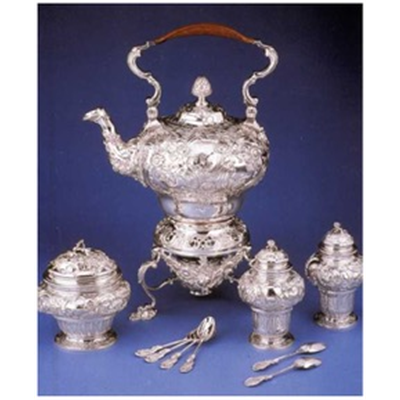 |
The Huguenots came to England in huge numbers in the late 17th century bringing a wide variety of skills - as silk weavers, silversmiths, clock makers, opticians, bankers, gilders, ironworkers, horticulturists etc. Names such as Paul de Lamerie, Samuel Courtauld and Jean Tijou spring to mind. In virtually all areas, they were innovators and more advanced than the English who were forced to improve their own skills or go out of business. Although the majority settled in London, others found their way to East Anglia, Macclesfield and Canterbury. This talk examines their lasting legacy. About out lecturer: Originally in academic art and design publishing, Sue is also a Fellow of the Huguenot Society, a Freeman of the City of London, a tutor at the City Literary Institute and a Blue Badge guide, conducting a variety of walks and visits. I am also happy to offer virtual tours. NB Sue Jacson will not allow us to use the TAS Zoom Guest Scheme |
|
| Thursday, 03 December 2026 |
| MARC CHAGALL AND THE SUPREMACY OF BLUE |
| HILARY GUISE |
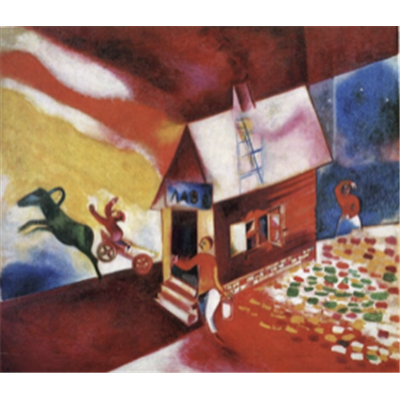 |
Chagall’s floating figures, dreamers, brides and lovers, exist in a rootless universe where gravity has no pull, and where there are no sure foundations and his only recourse was to trust in the narratives of his ancient people and draw on the strength of his God. As the quintessential alien in exile, his ever-present sense of loss resurfaces in dreamlike, childhood memories of his Hassidic Russian Jewish roots. His early Cubism in Paris gave way to a narrative style in his large Old Testament paintings in which Ultramarine dominates. It is the colour of wisdom and of the cosmos, and is also radiant in his stained glass windows. About our lecturer: Lectures in the main museums in London for American universities, and has toured widely in the USA and lectured for the Smithsonian Institution. Has also worked for the Art Fund, taught courses for Cambridge University, has been a guest speaker on cruises. Trained as a painter at Central St Martin’s, she exhibits abroad, most recently in Berlin and France. Lives in London and in Provence. |
|
| Thursday, 21 January 2027 |
| African Art: Craft or Curio? (Introduction into African and sub-Saharan tribal art) |
| NIRVANA ROMELL |
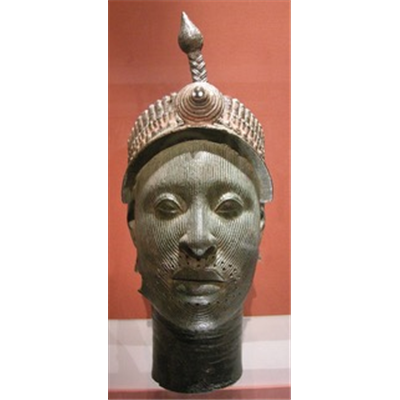 |
This is an easy-going introduction into traditional, sub-Saharan African art, inspired by my own learning experiences with this fascinating subject during the decade that I lived in Johannesburg, South Africa. The talk focuses on general misconceptions, basic facts and comparisons, influences of Africa on Europe and vice versa. It offers a broad overview of the artistic production across the continent and provides guidance as to how to look at African art. The lecture explains not only the general premises of African art appreciation but, with a light touch, shows how art can be used to replace postal service, help with marriage problems or deal with unruly teenagers. About our lectuer: Holds MEd in History of Art and MA in English Language & Literature, with 25 years of lecturing experience on 3 continents. Since arrival in the UK in 2003, she has been working as a freelance lecturer, public programmes consultant and tour director. She has regularly presented art history courses and lectures, as well as trained staff and volunteers, at the Manchester Art Gallery, the Walker Gallery in Liverpool, University of Manchester and other art and learning institutions. She also organizes and presents tours of permanent and temporary exhibitions across the UK and Europe, and study tours to the Balkans, northern Italy, France, Switzerland, Sweden and South Africa. |
|
| Thursday, 18 February 2027 |
| THE BEAUTY OF CUNEIFORM: APRENTICESHIP, MASTERY AND CALLIGRAPHY IN THE WORLD’S OLDEST SCRIPT AND LITERATURE |
| IRVING FINKEL |
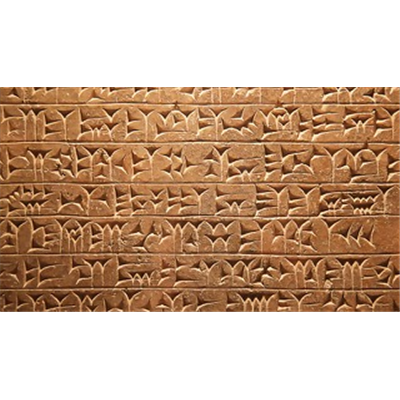 |
The speaker has devoted a lifetime to deciphering ancient Mesopotamian inscriptions in cuneiform written on tablets of clay. This close-up look pursues these long-dead people who have bequeathed such marvellous materials to us, from the first steps at school as recorded in comic stories in Sumerian to supplying King Ashurbanipal in the royal library at Nineveh with calligraphic masterpieces. Can be combined with Magic and Medicine in Mesopotamia and The Ark before Noah in a study day About our Lecturer: Irving Finkel is a keeper of ancient languages and scripts at the British Museum. He specialises in cuneiform inscriptions from Mesopotamia. |
|
| Thursday, 18 March 2027 |
| CLARICE CLIFF (1899-1972): THE DOYENNE OF ART DECO (S) |
| VIV LAWES |
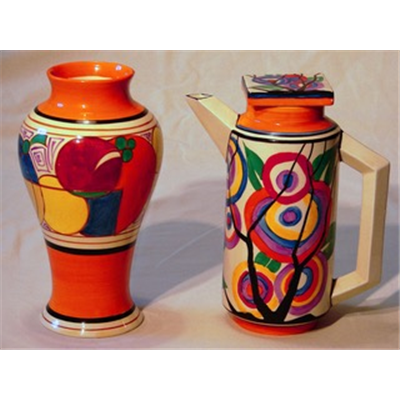 |
This lecture explores an artist whose work, inventiveness, and ability to catch the zeitgeist is still admired a century after her bold 'Bizarre' wares were launched in 1927. These Art Deco masterpieces are the products that most vividly signify Clarice Cliff's legacy. She spent a lifetime innovating. Born in 1899, she was a working professional whose lifespan covered the period in which women broke through the barriers of the art world. While the Royal Academy barred women from accessing the full training and privileges of their male counterparts, the pottery industry was one that had traditionally offered female artists the opportunities to excel. Cliff's talents were recognised when she was still a teenager, and she went on to produce designs that keyed into the cutting-edge trends of the period, setting the bar for ceramics as a commercial art form. About our Lecturer: I am an art historian, curator, author and journalist with over 25 years’ experience in the art market. I teach at several Higher Education institutions, including Sotheby’s Institute of Art, London, where I lead the professional certificate in Art History, as well as the University of the Arts London, Imperial College, SOAS (University of London) and the City & Guilds of London Art School. In 2021 I received the Geoffrey Bond Bursary for Art, an annual prize awarded by the Worshipful Company of Educators to an “outstanding educator” nominated by their institution. My articles, essays and reports have been published in numerous specialist journals, newspapers, catalogues, handbooks and websites, aimed at both the academic and general readership in print and online. Since 2011 I have been Senior UK Consultant to Singapore gallery One East Asia and have co-curated many exhibitions of Southeast Asian modern and contemporary art in London and Singapore. When time allows I lecture as an on-board art historian for cruise lines. |
|
| Thursday, 22 April 2027 |
| THE SUN AT MIDNIGHT: IDEALISM AND ANGST IN NORDIC ART |
| JUSTIN REAY |
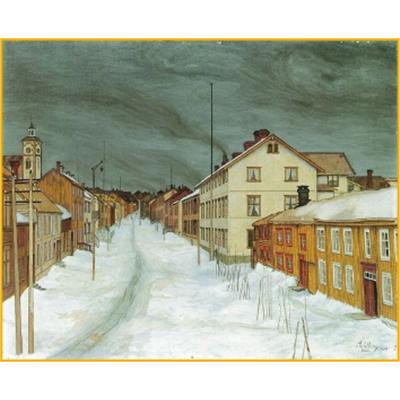 |
Scandinavia, Finland and the Baltic are regions beset by darkness throughout the winter but blessed by long hours of sunlight in summer. This is a special human experience of light, subdued in the few hours of winter day but often illuminated at night by the phenomenon of the Northern Lights, while being sharp and clear in the long summer days and lambent in the hours of the Midnight Sun. Nordic artists have tried to capture these qualities, and their effects of upon their psychedemonstrated in the words of Strindberg and Ibsen, and the music of Grieg and Sibelius. Justin discusses this unique aesthetic in paintings by Harald Sohlberg, Halfdan Egidius, Munch, Zorn, Rørbye, Anna Ancher, Dora Wahlroos, Richard Bergh, Hammershøi, PS Krøyer, the Finnish Expressionists, and the Danish Impressionists of Skagen. About our lectuer: After officer service in the Royal Navy Justin had a long career in business management, latterly as Director of Studies for executive colleges in Oxford and Washington DC. He was one of the earliest consultants in knowledge management and e-learning, advising the UK Government, until he retired from business in 2000. Justin then studied the History of Art and Architecture at Oxford, and later studied Classical culture with the University of Athens. While researching for a doctorate in naval history, Justin was invited to join the Bodleian Library as a senior academic manager, advising external researchers and graduate students, editing manuscripts in the Bodleian's collections, and acting as the Bodleian’s internal consultant on maritime documents and artworks. He is a published historian. A qualified teacher, he is a tutor in the History of Art and Architecture and Classical Studies for independent colleges at Oxford and for private graduate students. He was recently commissioned to write a university preparation course on human creativity and innovation in the age of Artificial Intelligence. A member of the Arts Society West Oxfordshire, Justin is a frequent lecturer for The Arts Society with a wide range of talks, study mornings and study days on art history, painting, sculpture, architecture and decorative arts across cultures from antiquity to the modern era |
|
| Thursday, 20 May 2027 |
| TIME MACHINES: CLOCKS IN ART AND LITERATURE FROM C.1300 TO NOW |
| Christina Faraday |
 |
Few people nowadays give more than a second thought to their clocks: practical, sometimes beautiful, devices that form the background noise of our daily lives. But from their introduction in the thirteenth century onwards, clocks have held a variety of philosophical and social meanings. This talk explores the visual and literary uses of the clock, the varied meanings it could hold throughout the ages: as an ominous symbol of oncoming death, but also as a metaphor for the soul, for capitalism, and for the good use of time. About our Lecturer: Dr Christina Faraday FSA FRHistS is a historian of art and ideas, specialising in Tudor and Stuart Britain and the wider 16th and 17th-century world. She is an Affiliated Lecturer in History of Art at the University of Cambridge, a Trustee of the Walpole Society for British art history, and a BBC New Generation Thinker, appearing regularly on BBC Radio 3 and in other popular media. She is the host of British Art Matters podcast, and from 2020-2025 she was a Research Fellow in History of Art at Gonville and Caius College, Cambridge. She is an experienced lecturer, teaching for the History of Art Department at the University of Cambridge, The Wallace Collection, the National Gallery, London, and for Professional and Continuing Education at Cambridge, where she is Co-Director of the MSt in History of Art and Visual Culture. Her first book, Tudor Liveliness: Vivid Art in Post-Reformation England, was published in 2023 by the Paul Mellon Centre and Yale University Press. Her latest book, The Story of Tudor Art, was published by Head of Zeus/Bloomsbury in September 2025 and was named a Times and Sunday Times Book of the Year. |
|
| Thursday, 17 June 2027 |
| Durer: Graphic Artist of Pure Genius |
| Hilary Williams |
 |
Durer: Graphic Artist of Pure Genius Albrecht Dürer is among the stars of graphic art, of printmaking, in the Germanic lands. Based in influential Nuremberg, one of the centres of the Reformation and a hub of publishing, Dürer rose to prominence artistically and in the city’s government. Some of his prints established images which still pack a visual punch today. He went to Venice twice in his career and meeting Giovanni Bellini there changed his artistic life. Venice opened his eyes to the Italian Renaissance and guided him to have great aspirations for the art of his homeland. About our Lecturer: Formerly a curator and Print Room Superintendent at the British Museum, now Art History Education Officer in the Department of Learning & National Partnerships at the Museum. Lectures for BM and Wallace Collection. Founding Artistic Director of The Arts Society of North Kent Evening. Specialist in 17th century art and has published on Rembrandt. Hilary has vast experience of giving gallery talks, of lecturing and of leading art history tours in UK, Europe, New York and Boston. For the Royal Collection Trust, she has guided Special Interest Private Tours of the State Apartments at Buckingham Palace. |
|